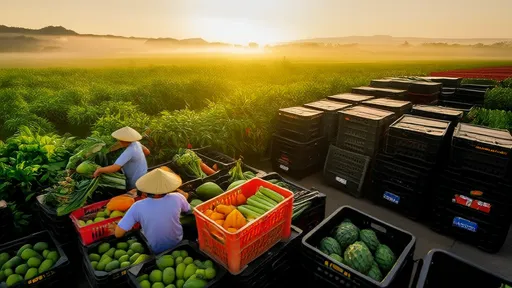
Vietnam's agricultural sector is witnessing a remarkable transformation as its fruit and vegetable exports surge toward an unprecedented milestone. Industry analysts and government officials project that the country's produce exports will breach the $10 billion threshold this year, marking a significant achievement for a nation traditionally known for its rice and coffee exports. This remarkable growth trajectory represents more than just numbers—it signifies Vietnam's evolving position in global agricultural trade and its successful diversification into high-value export commodities.
The journey toward this export milestone has been years in the making, characterized by strategic planning and gradual market expansion. From humble beginnings where exports barely registered on international radar, Vietnam's fruit and vegetable sector has demonstrated consistent growth, overcoming numerous challenges including quality standards, logistical hurdles, and intense international competition. The current export figures represent a compound annual growth rate that has consistently outperformed many other agricultural sectors, making fruits and vegetables one of Vietnam's most dynamic export categories.
Central to this export success story is the increasingly vital role played by the Chinese market. Over the past decade, China has emerged as the dominant destination for Vietnamese fruits and vegetables, accounting for a substantial portion of the export revenue. The geographical proximity, coupled with growing Chinese consumer demand for tropical fruits, has created a natural trade synergy between the two neighboring countries. Vietnamese dragon fruit, mangoes, lychees, and bananas have become familiar sights in Chinese supermarkets and wholesale markets across southern China and beyond.
The relationship between Vietnamese exporters and Chinese importers has matured significantly over time. What began as informal border trade has evolved into sophisticated supply chains involving proper documentation, quality certifications, and established distribution networks. Vietnamese exporters have adapted to Chinese market preferences and regulatory requirements, implementing better packaging, cold chain logistics, and quality control measures to meet the exacting standards of Chinese consumers and authorities.
Several factors have converged to make China such a crucial market for Vietnamese produce. The rising middle class in China has developed a taste for exotic fruits, viewing them not just as food items but as luxury goods and healthy alternatives to traditional snacks. Vietnamese fruits, with their tropical characteristics and perceived freshness, perfectly cater to this evolving consumer preference. Additionally, China's own agricultural production cannot fully satisfy the domestic demand for tropical fruits, creating a natural market gap that Vietnamese exporters have efficiently filled.
Trade agreements and improved border procedures have further facilitated this growing export relationship. The implementation of streamlined customs clearance processes and the establishment of designated border gates for specific agricultural products have reduced transit times and minimized spoilage. These logistical improvements have been crucial for maintaining the quality of perishable goods during transportation, ensuring that Vietnamese fruits reach Chinese consumers in optimal condition.
Beyond China, Vietnamese exporters have been strategically diversifying their market reach. While China remains the dominant market, significant inroads have been made in other regions including Southeast Asia, the Middle East, and increasingly, demanding markets like the United States, Japan, and South Korea. This diversification strategy represents a prudent approach to risk management, ensuring that the sector is not overly dependent on any single market while simultaneously building Vietnam's reputation as a reliable global supplier of quality produce.
The transformation within Vietnam's domestic agricultural sector has been equally impressive. Farmers have shifted from traditional subsistence farming to more commercial-oriented production, adopting better cultivation techniques and focusing on quality rather than just quantity. Government extension services and private sector initiatives have played crucial roles in this transition, providing farmers with technical knowledge, access to better planting materials, and information about market requirements.
Investment in post-harvest technology and processing infrastructure has been another critical factor in the sector's growth. The establishment of modern packing houses, cold storage facilities, and processing plants has significantly reduced post-harvest losses and extended the shelf life of exported products. This infrastructure development has enabled Vietnamese exporters to meet the stringent quality standards of international markets, particularly for fresh fruits that require careful handling and rapid transportation.
The Vietnamese government has supported this export growth through targeted policies and strategic planning. Agricultural restructuring programs have encouraged farmers to shift to high-value crops, while trade promotion agencies have actively facilitated market access through trade fairs, business matching events, and diplomatic efforts. The government's focus on developing geographical indications and protecting intellectual property for distinctive local fruits has also helped build brand value for Vietnamese produce in international markets.
Looking ahead, the sector faces both opportunities and challenges. Climate change poses significant risks to agricultural production, requiring adaptation strategies and more resilient farming practices. International competition remains fierce, with other tropical fruit-producing countries also vying for market share in key import markets. Additionally, evolving consumer preferences and regulatory requirements in import markets will demand continuous improvement in quality standards and sustainability practices.
Nevertheless, the momentum behind Vietnam's fruit and vegetable exports appears strong. Industry participants express confidence that the $10 billion export target is not just achievable but sustainable in the long term. The continued growth of the Chinese market, coupled with successful diversification into other regions, provides a solid foundation for future expansion. Moreover, the increasing global trend toward healthy eating and plant-based diets creates favorable conditions for continued growth in fruit and vegetable consumption worldwide.
The success of Vietnam's fruit and vegetable exports represents a broader story of economic transformation and global integration. It demonstrates how a developing country can leverage its agricultural strengths to create economic value and improve rural livelihoods. As Vietnamese fruits continue to find their way to dining tables across Asia and beyond, they carry with them not just nutritional value but also the story of a nation's journey toward economic modernization and global market relevance.
For international traders and consumers, the rise of Vietnam as a major fruit and vegetable exporter means greater variety, competitive pricing, and year-round availability of tropical produce. For Vietnam itself, this export success translates into rural employment, farmer income growth, and valuable foreign exchange earnings. As the sector continues to evolve and mature, it stands as a testament to what can be achieved through strategic planning, market-oriented production, and persistent effort to meet the demands of global consumers.

By /Nov 4, 2025

By /Nov 4, 2025

By /Nov 4, 2025

By /Nov 4, 2025

By /Nov 4, 2025

By /Nov 4, 2025

By /Nov 4, 2025

By /Nov 4, 2025

By /Nov 4, 2025

By /Nov 4, 2025

By /Nov 4, 2025

By /Nov 4, 2025

By /Nov 4, 2025

By /Nov 4, 2025

By /Nov 4, 2025
By /Nov 4, 2025

By /Nov 4, 2025

By /Nov 4, 2025

By /Nov 4, 2025

By /Nov 4, 2025